

University of Bristol Chemistry Display | Royal Society London
Modular Science Communication | Student Recruitment & Public Engagement
Project Scope & Royal Society Context
Exhibition display design for the University of Bristol School of Chemistry at the prestigious Royal Society Summer Science Exhibition in London. Held annually at Carlton House Terrace, this week-long event is the UK's premier public science showcase, attracting 12,000+ visitors including school groups, families, policymakers and science communicators. The brief addressed dual objectives: engaging public audiences with cutting-edge chemistry research and attracting prospective undergraduate students to Bristol's chemistry programmes. The display needed to communicate complex molecular science accessibly while providing interactive zones for hands-on demonstrations and research discussions with Bristol's chemistry PhD students and faculty.
Molecular-Inspired Modular Architecture
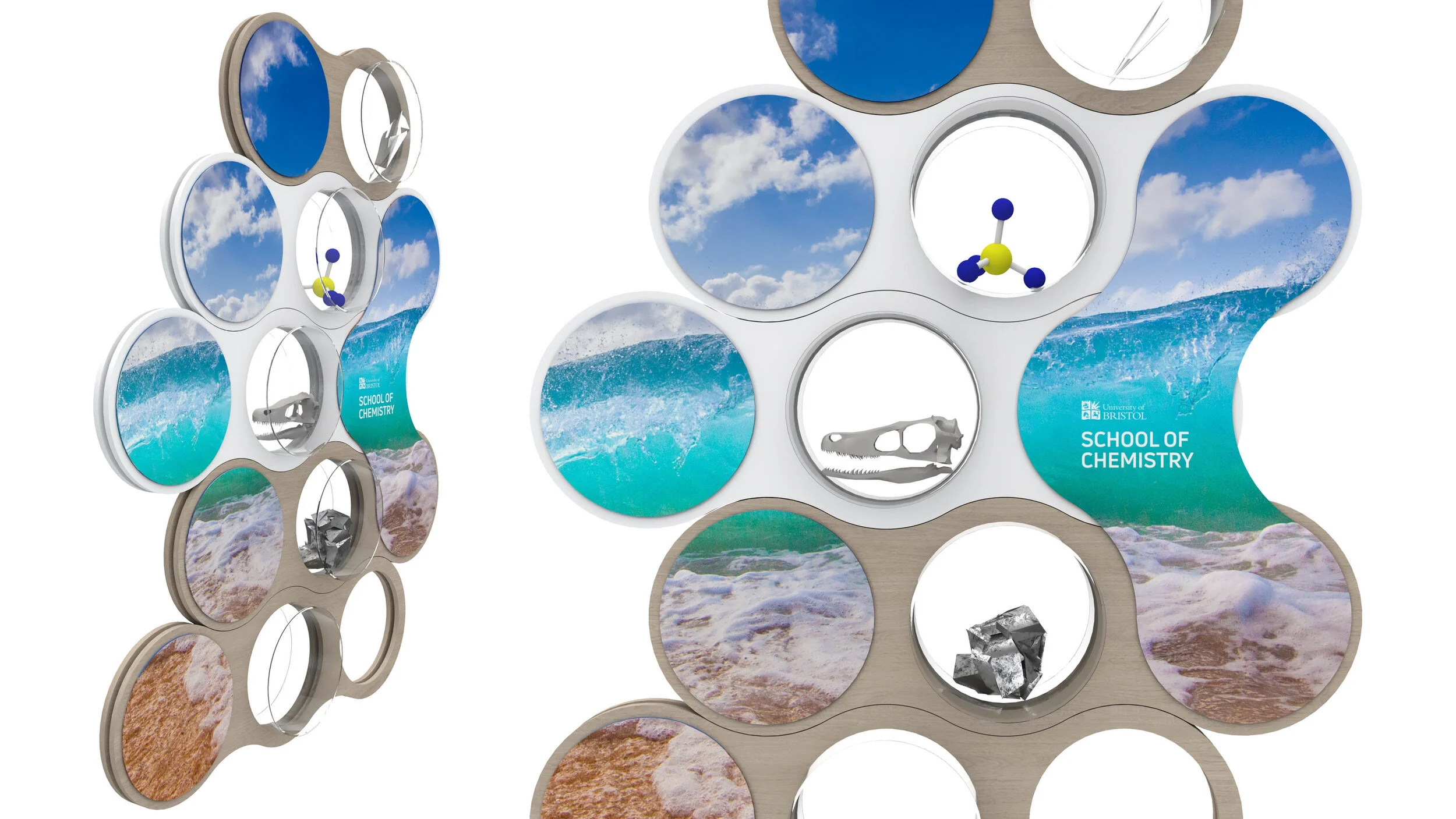
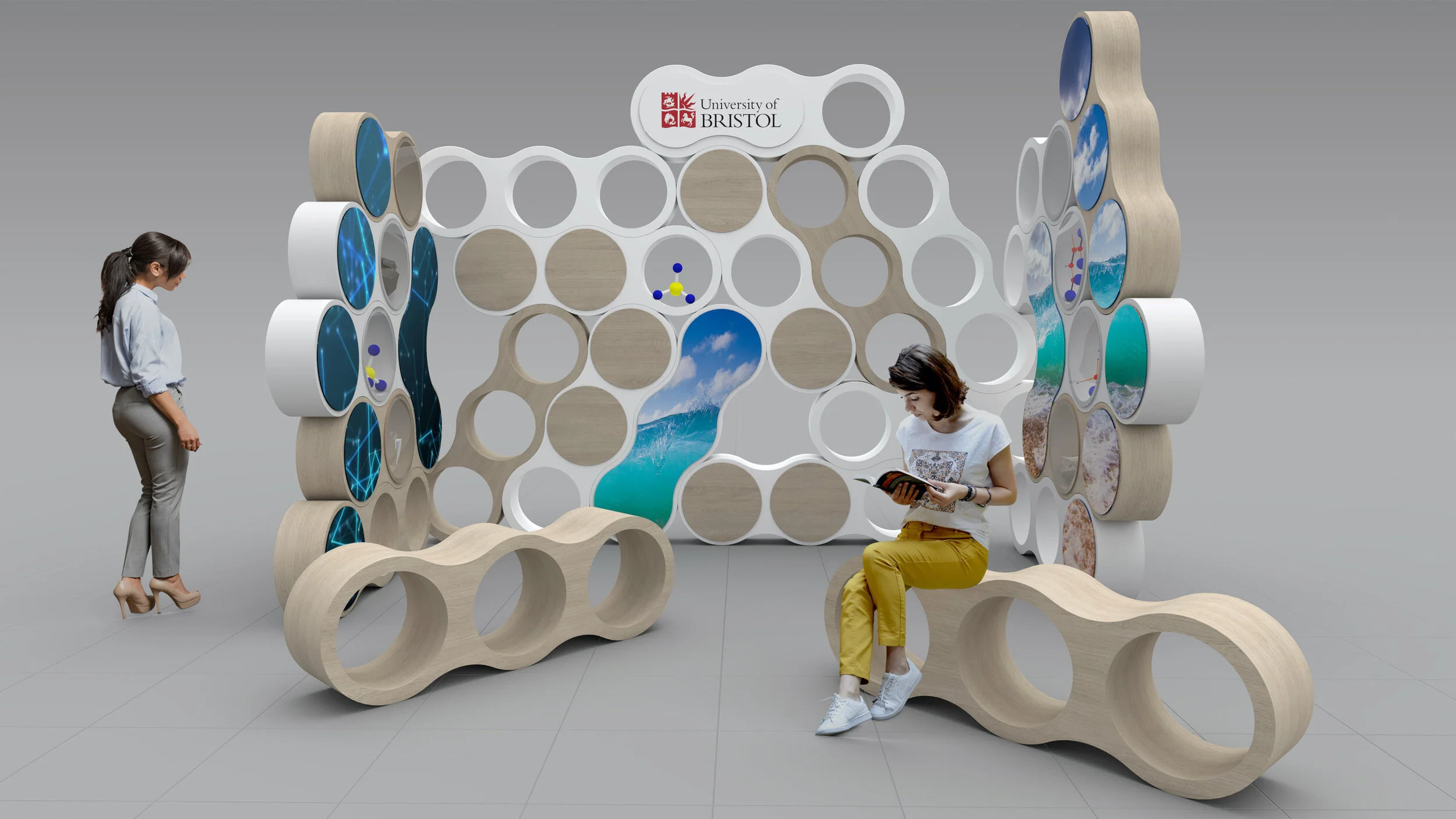
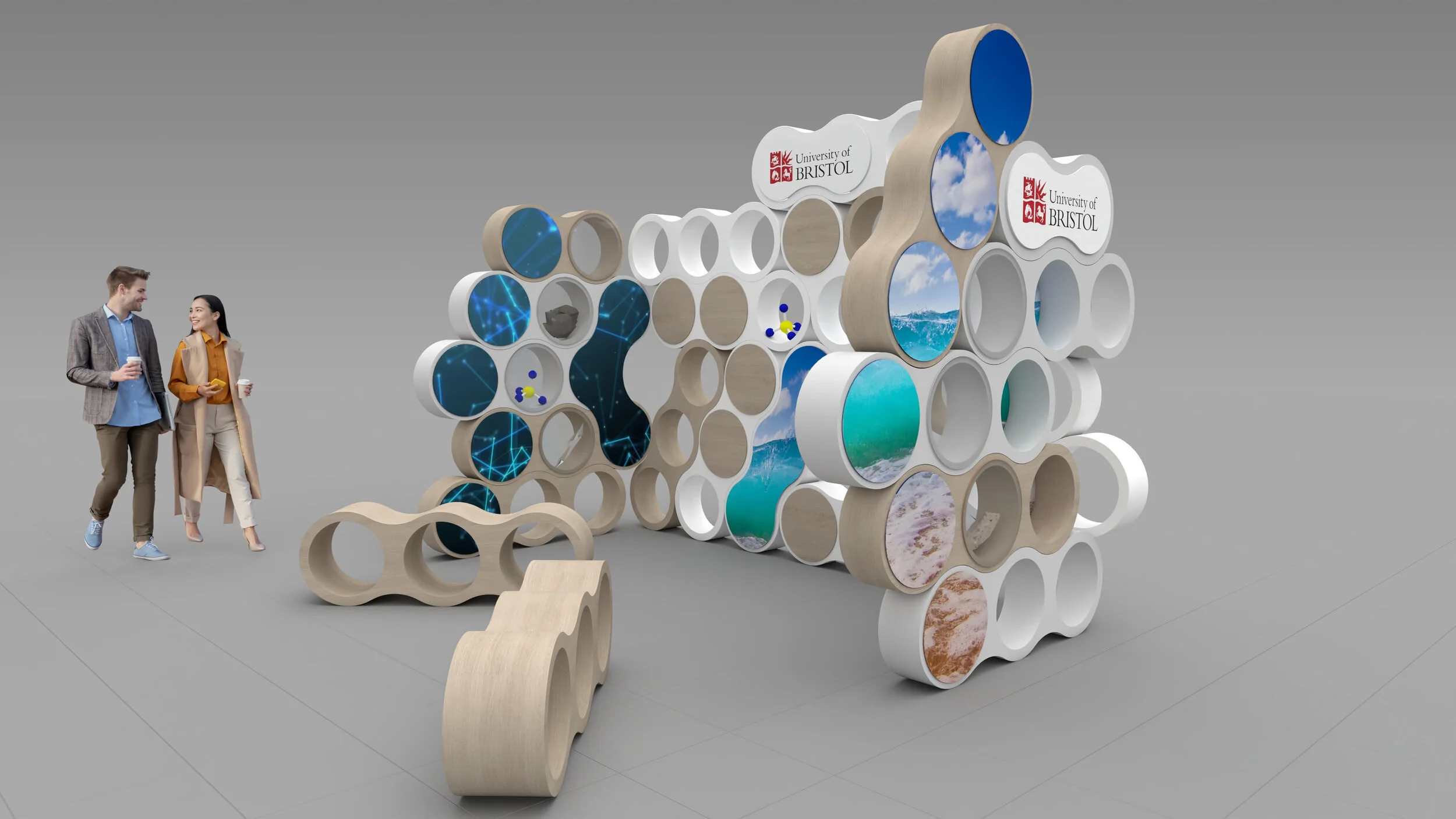
The custom modular structure uses hexagonal cellular blocks creating abstract molecular formations - directly referencing the University of Bristol Chemistry department's research in molecular science, computational chemistry and materials research. Multi-functional blocks reconfigure into various layouts: presentation podiums, demonstration benches, display platforms or seating areas. The geometric modular system allows Bristol's team to adapt the footprint for different Royal Society floor allocations across multiple years while the molecular aesthetic immediately communicates "chemistry" to visitors approaching the stand. Sustainable lightweight cellular materials enable easy transport from Bristol to London and tool-free assembly by university staff.
Science Communication & Student Recruitment
The design balances serious academic research presentation with approachable public engagement. Interactive demonstration zones invite visitors to participate in chemistry experiments, molecular modeling displays showcase Bristol's computational research and video screens present faculty discussing research applications. The modular architecture creates distinct zones: public interaction areas for general visitors and school groups, research discussion spaces for prospective students meeting with current PhD researchers and professional consultation areas for academic collaborators or industry partners exploring Bristol's chemistry capabilities. The friendly, colorful molecular aesthetic reduces intimidation factor that complex science displays can create.
Results & Academic Exhibition Success
The University of Bristol display successfully engaged diverse Royal Society audiences, from school children exploring molecular structures to A-level students evaluating university chemistry programmes. The modular system's reconfigurability would prove valuable across multiple Royal Society exhibitions, with Bristol Chemistry adapting layouts for different research themes each year while maintaining consistent brand presence. The investment in reusable exhibition infrastructure supports Bristol's ongoing science communication strategy, demonstrating how universities can create professional public engagement displays that serve both educational outreach missions and strategic student recruitment objectives at the UK's most prestigious annual science exhibition.